Reencuentro II
2023



Installation
Reencuentro, MFA Thesis show,
Concordia University, 2023
Reencuentro, MFA Thesis show,
Concordia University, 2023
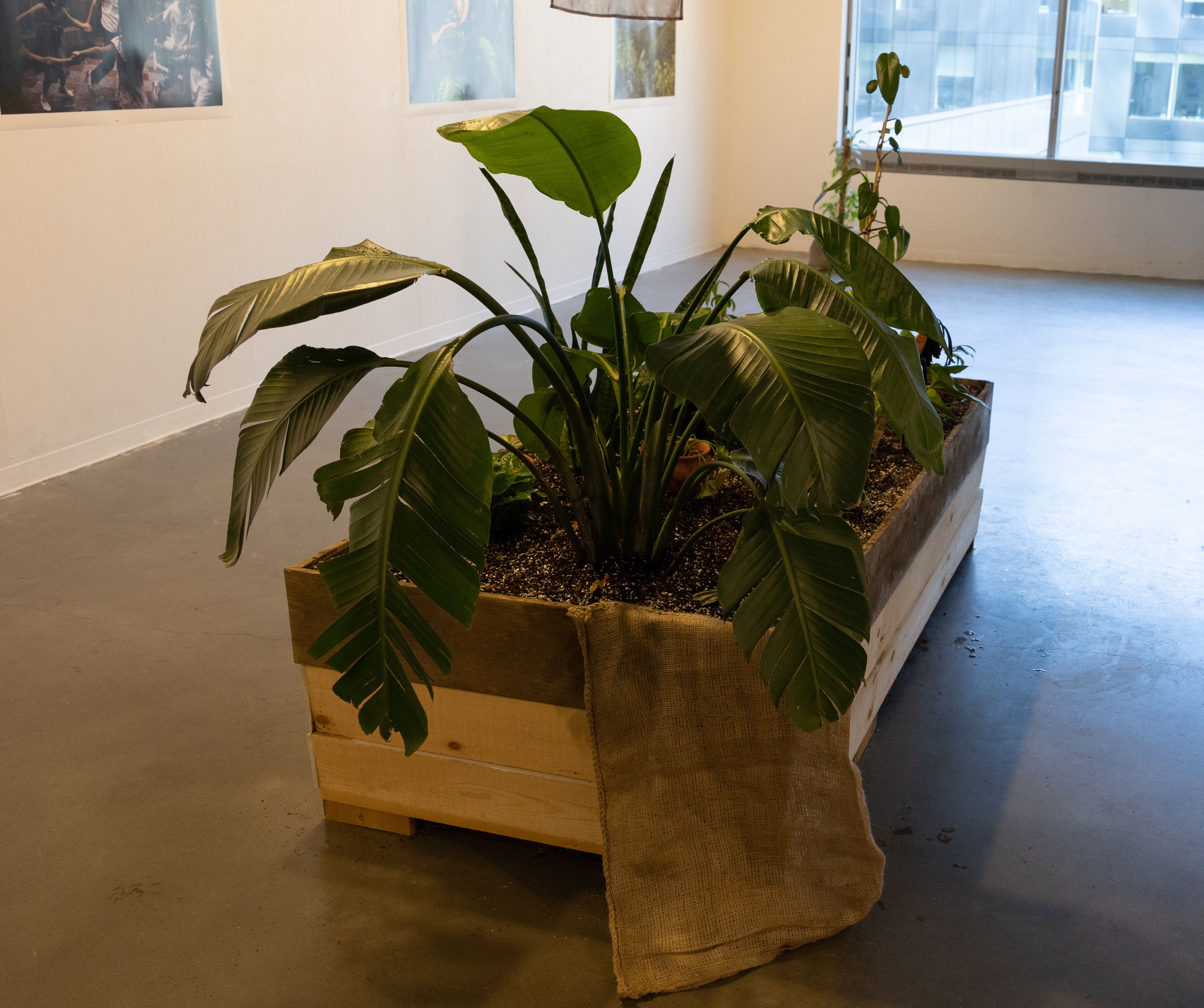
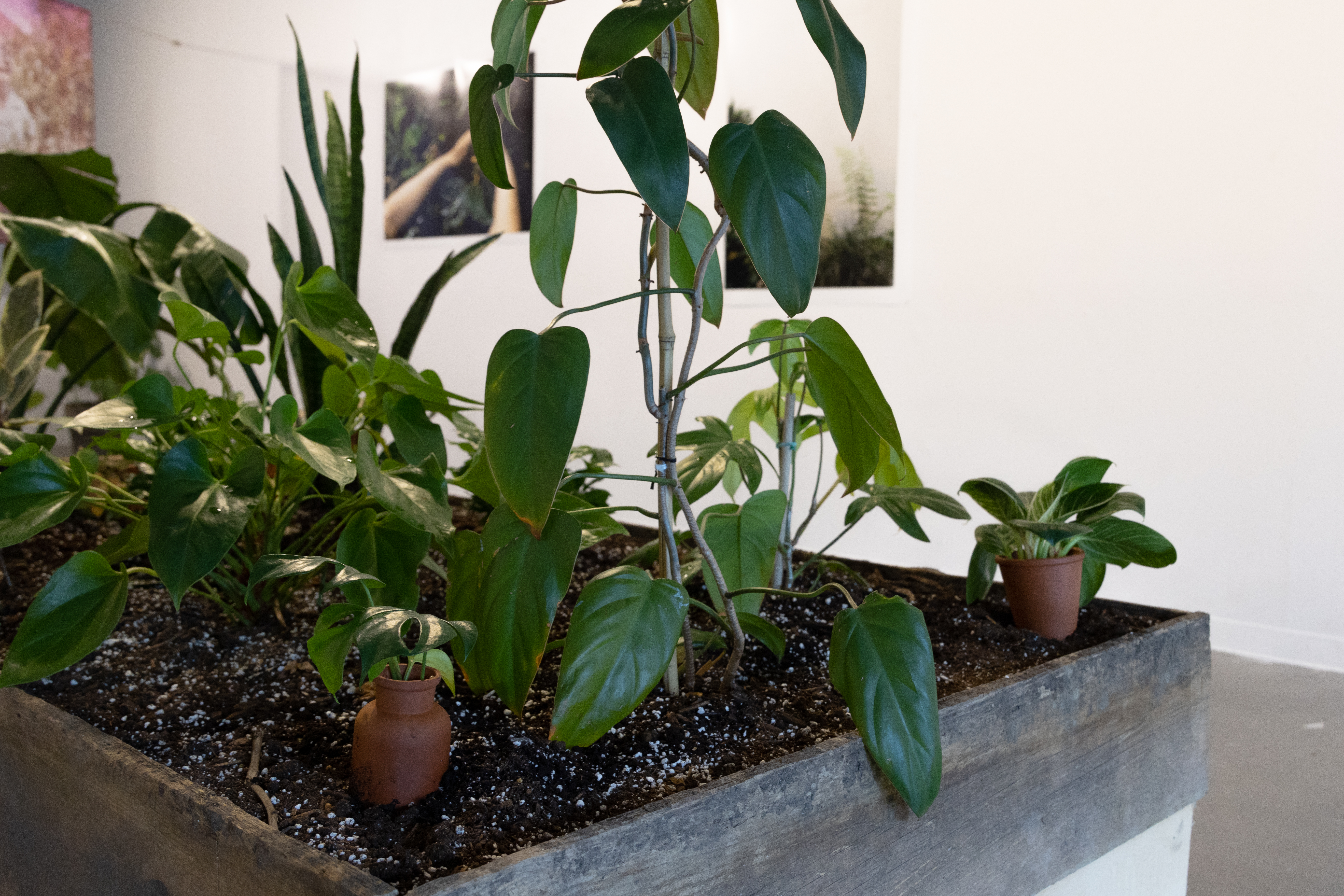
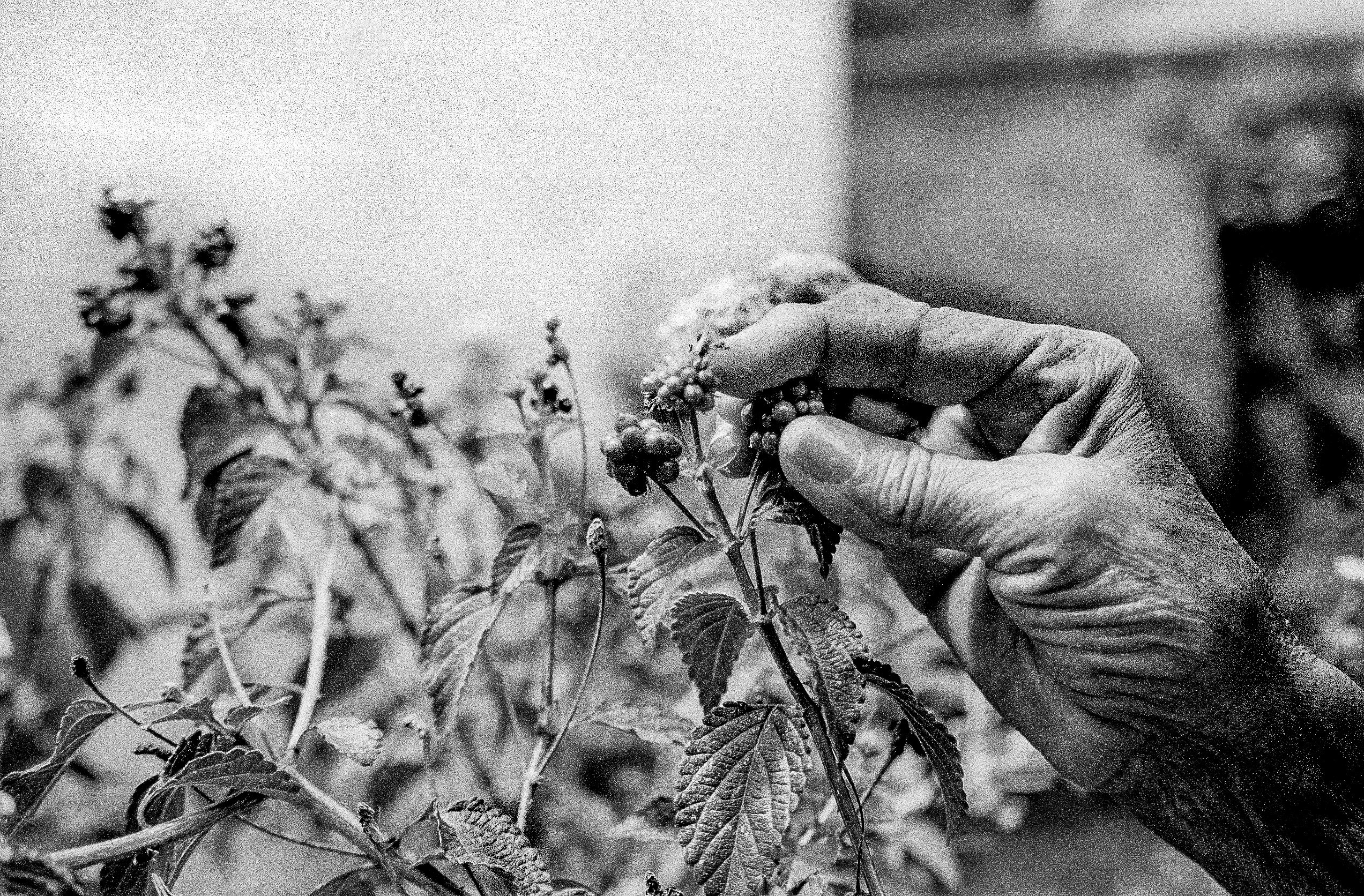
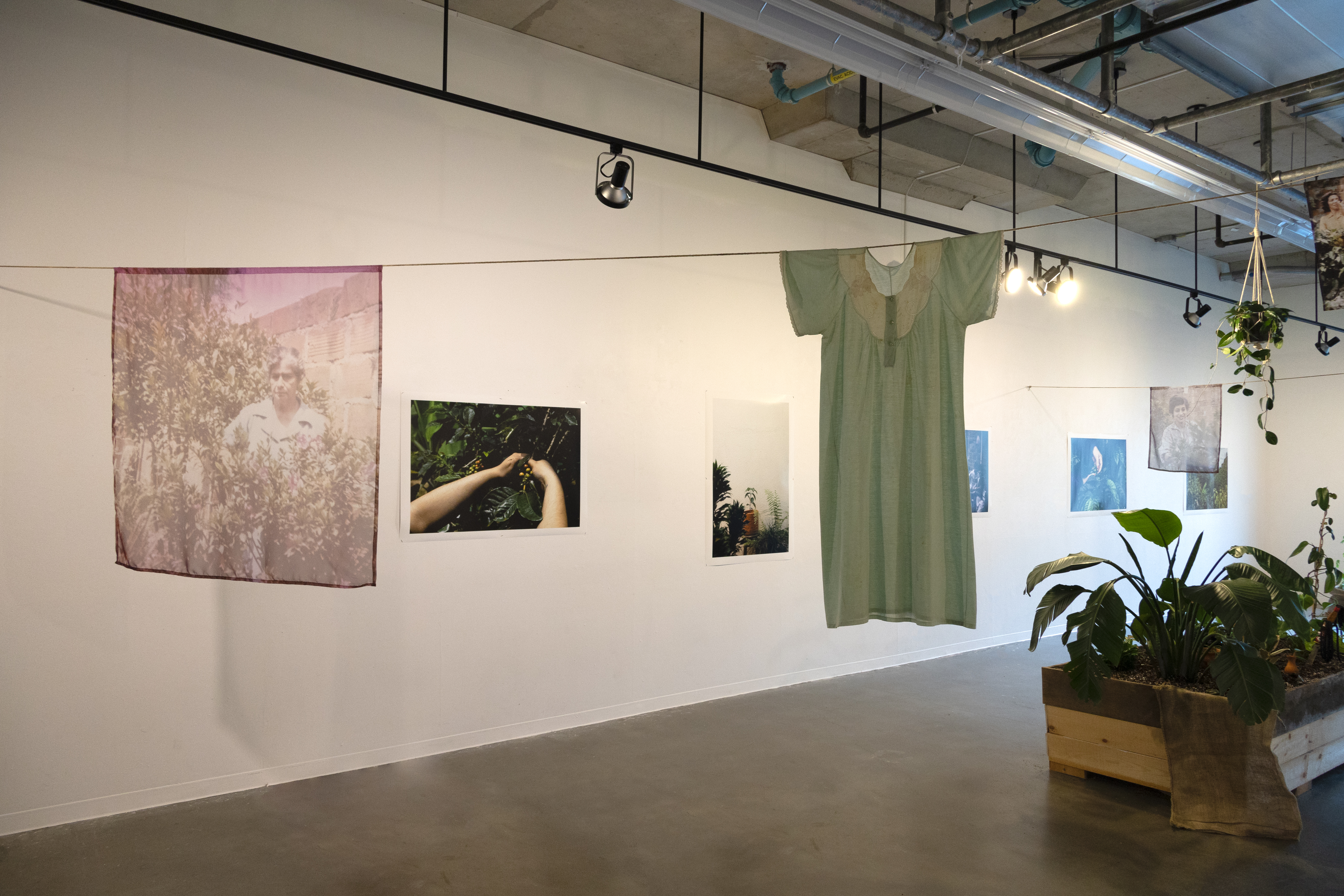
Reencuentro II is a multimedia installation composed of photographs printed on paper, cotton, and chiffon; sculptural elements, including a garden bed, a broken pot, two coffee-stained cotton clotheslines, and plants; an audio component; and a short film.
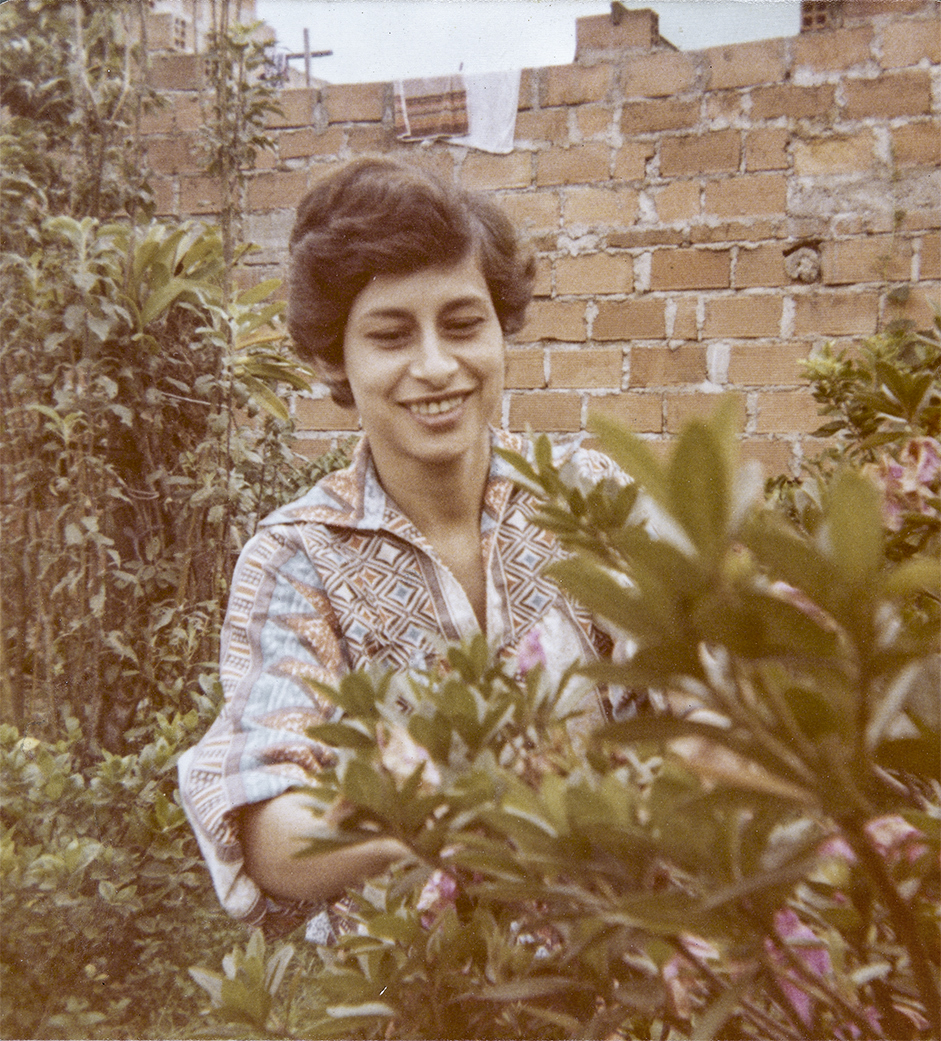
The images tell the story of four generations of women in my family, whose lives have unfolded across different decades of Colombia’s violent history. Through these images and domestic objects, the installation explores the relationship between familial memory, domestic space, and forced displacement. At its centre is the garden that my grandparents established in the backyard of their home, a space that became deeply significant to my family across generations.
Upon entering the installation, the viewer encounters a broken plant pot on the floor. The pot evokes the experience of being violently displaced from one's home, often accompanied by the destruction of personal belongings and the emotional devastation that follows. It serves as a reminder that displacement entails not only the loss of a physical place, but also the disruption of the relationships, memories, and sense of belonging associated with it.
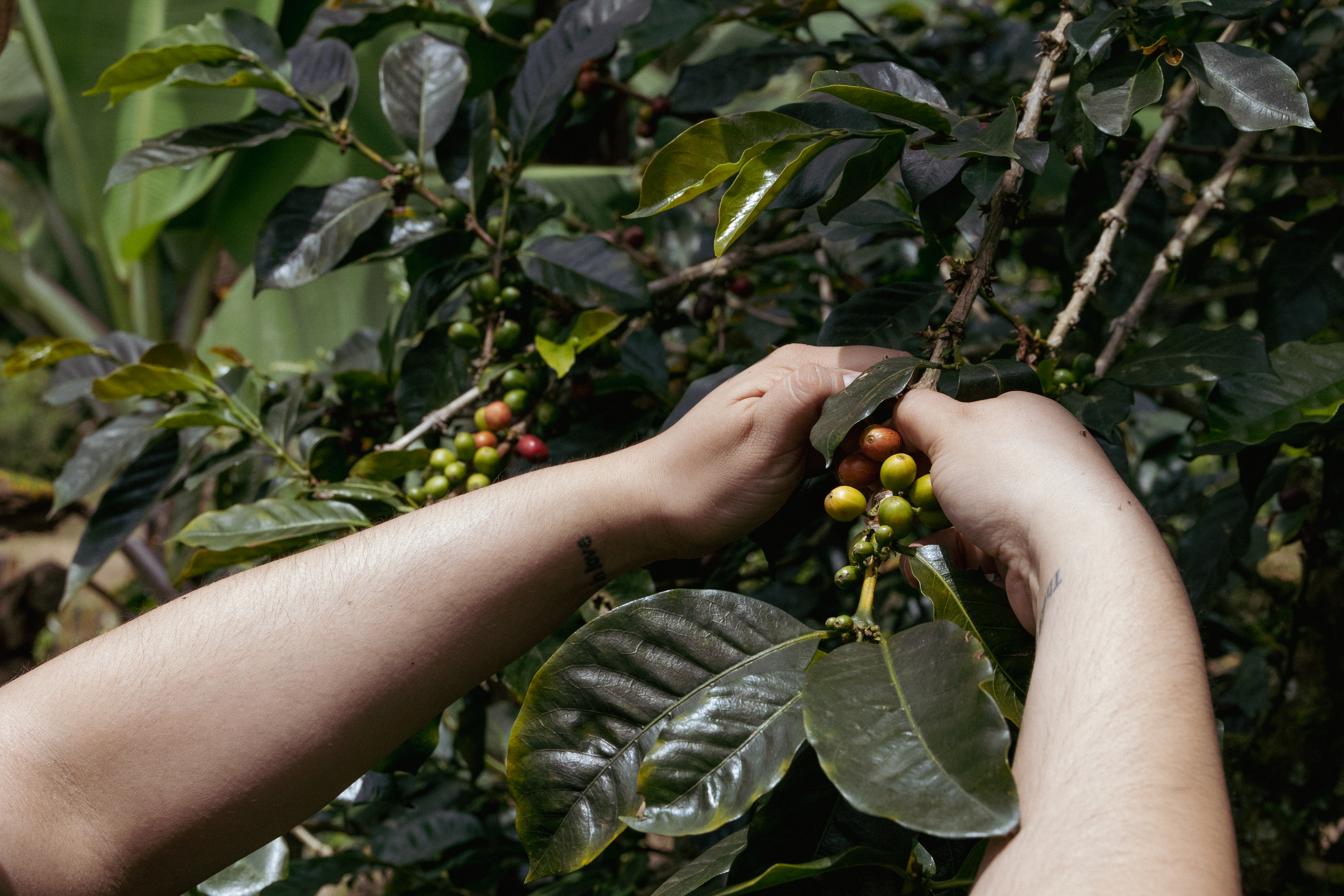
Photographs printed on cotton and chiffon fabrics hang from cotton ropes stained with coffee. The coffee recalls the region where my grandmother, Herminia, grew up, connecting the installation to her labour in the coffee fields and to the coffee plants she later brought into her garden. The ropes also evoke the clotheslines my grandmother used to hang laundry above and around the garden, bringing the domestic practices of her home into the exhibition space.
The fabrics vary in opacity, creating layers through which the images become partially visible or obscured. This material quality reflects the nature of oral history and familial memory: some recollections remain vivid, while others fade, shift, or become fragmented as they are retold across generations. The hanging photographs also evoke domesticity through their relationship to laundry and everyday household practices. Among them hangs the last pair of pyjamas my grandmother wore before she passed away, bringing an intimate and personal trace of her presence into the installation.
Beneath the hanging ropes, at the centre of the room, a garden bed holds tropical plants, three Arabica coffee plants, a machete, eggshells, burlap coffee sacks, and terracotta pots. By bringing these elements into the gallery, I transform the conventional white-cube space into an environment that evokes the domestic garden. The garden becomes both a physical presence and a site through which familial histories, inherited practices, and memories of home can be revisited.
An audio component recounts my grandmother’s life on a coffee farm and the circumstances that led her to establish her garden in Medellín, approximately three hours from Jardin, her hometown. Around 1950, she moved there following two significant events: her family's rejection of the person she had chosen to love, and the political violence affecting rural areas of Colombia at the time. Her story situates the garden within a history of displacement, showing how a new domestic space emerged from the loss of another.
The installation also incorporates Monólogo de una persona sin voz (Monologue of Someone Without a Voice), a poem by Colombian writer and lawyer Darío Jaramillo Agudelo. The poem addresses the devastating experience of losing one's home through violent and forced displacement, extending the personal and familial histories presented in the installation into a broader reflection on violence and the loss of belonging.
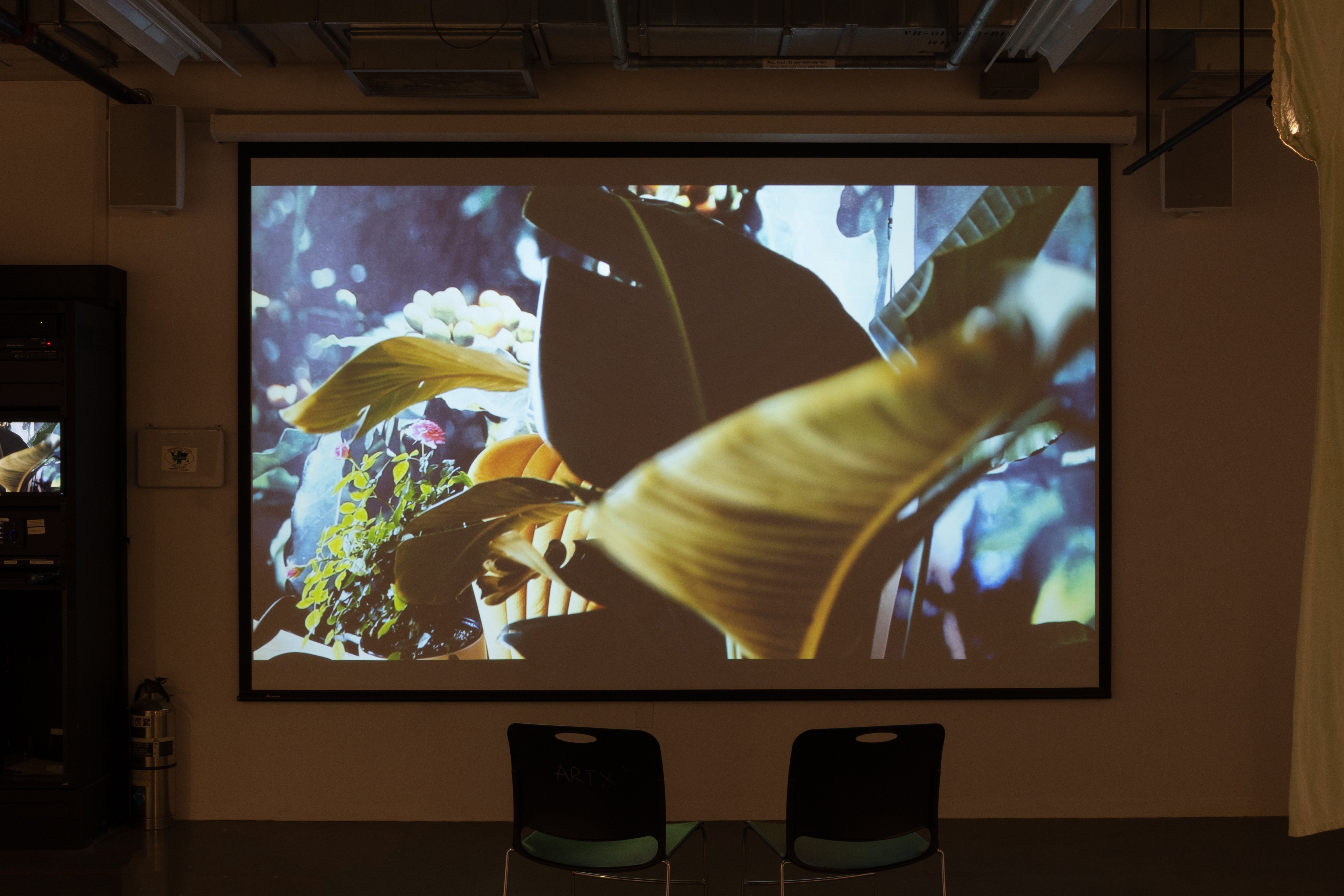
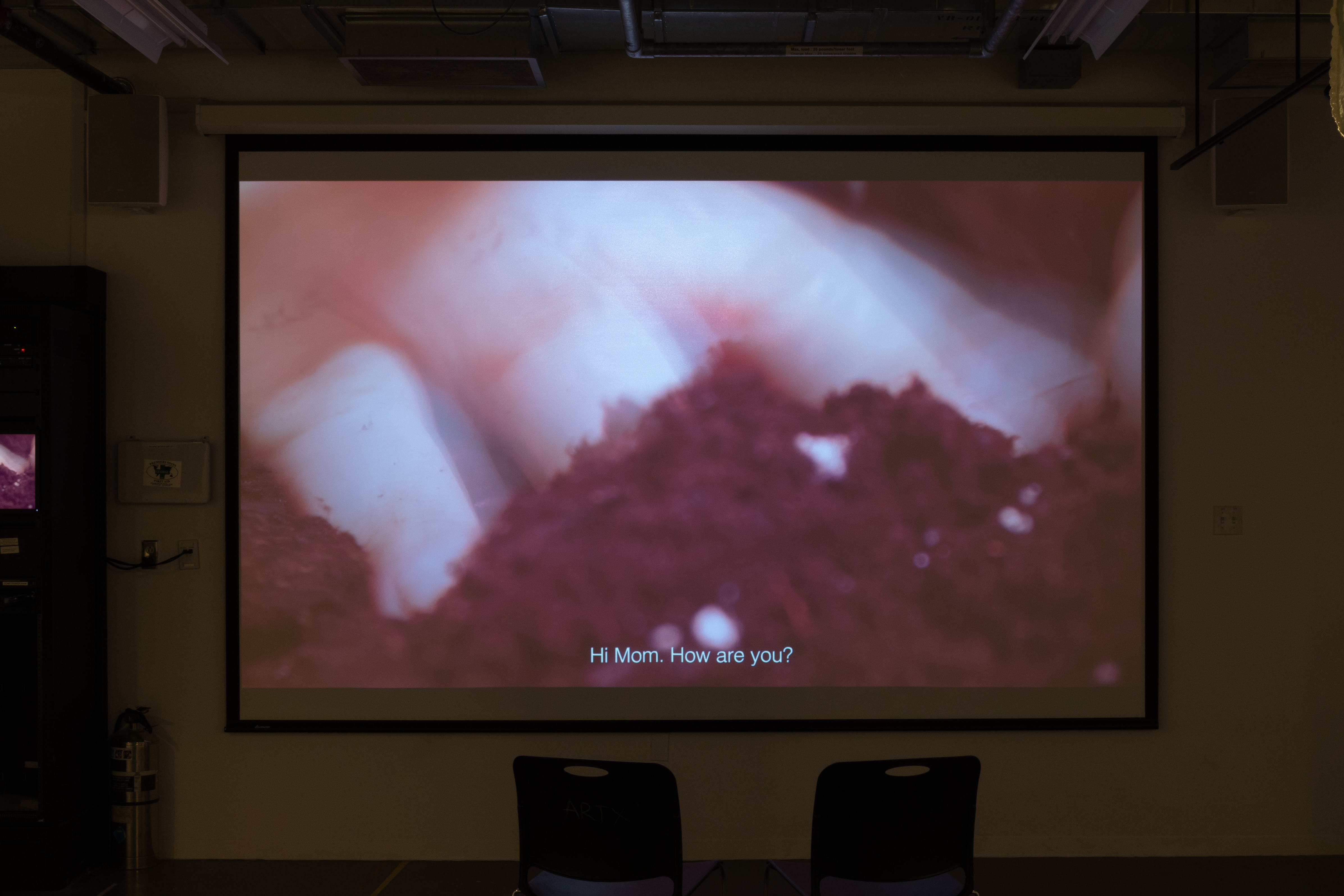
The final element is a short film that opens on a screen filled with a shade of pink, drawn from the only photograph my family has of my grandmother Herminia posing alone in her garden. This portrait is also displayed on one of the cotton ropes, connecting the film to the installation's arrangement of images and domestic materials.
The film features the audio of Reencuentro I (My Plants Told Me About Us (2021), a telephone conversation with my mother, in which she recalls her mother's relationship with plants and the care she devoted to them. Accompanying her voice are glimpses of different moments from my research: introducing myself and my plants, discovering photographs of my grandmother in her garden, and travelling with my mother to Jardín, her hometown. Through these encounters, the film traces my attempt to reconnect with a familial history that has been transmitted through stories, images, gestures, and the care of plants.